


I’ve had Achával-Ferrer in my life for so long that I sometimes forget it’s “a destination” for people.
When I was starting out, Santiago Achával was consulting at The Vines of Mendoza, and he trained us more than once. We did blind tastings, we got corrected in real time, and I learned a lot from him in that very unromantic way you actually learn: glass after glass, comparing, missing, recalibrating. He wasn’t a logo to me—he was a winemaker in a room. Later, you realize he was also one of the founding partners of Achával-Ferrer (with Roberto Cipresso and Manuel Ferrer).
Achával-Ferrer started as what you could call a Malbec specialist, and even after the portfolio opened up, Malbec never stopped being the spine. Their first big “step outside pure Malbec” was Quimera—a blend that was literally named like that because it was a pursuit (a “perfect” idea you chase, knowing it’s almost impossible).
But the reason I keep choosing Achával—and consider it a must-visit on wine tours in Mendoza—isn’t the speech. It’s the attitude behind the wine.
Vineyard DNA and the Idea of Memory
This is a winery that’s obsessed with vineyard DNA—in the most literal sense. They’ve worked with old material for years, and they protect that identity as if it matters. That includes the old-school way of renewing a vineyard without “changing” it: taking a cane from an old vine, burying it, letting it root, cutting it loose, and getting a new plant with the same genetic identity (a natural clone, basically). That idea—keeping the vineyard’s memory alive—isn’t marketing for them. It’s the point.
And then there’s something else that makes them… Achával: They’re comfortable with risk. Mendoza has a few real threats. Hail is one of them. Most people try to control everything. Achával’s philosophy has always leaned more toward: this place is what it is; the vines have lived here long before us; we’re not going to over-protect them just to sleep better. That mindset shows up everywhere in how they work.
Discipline Over Romance
Same with yields. They’re known for doing the kind of brutal crop reduction that many wineries reserve for one flagship wine—except Achával tends to apply that “quality first, production second” logic as a broader philosophy. Less fruit, better fruit. Fewer clusters, more concentration. It’s not the romantic version of wine. It’s the disciplined version.
If you want the cleanest, most convincing proof of what they do, it’s not a tour. It’s a flight.
Try their single-vineyard Malbecs side by side: Finca Bella Vista, Finca Altamira, and Finca Mirador. Same grape, three totally different personalities. That’s the moment where Mendoza stops being “Malbec country” and becomes what it actually is: a set of places, each with its own signature—the kind of contrast explored in depth when understanding Malbec in Argentina.
I’ve been going there for about twenty years, and what I respect is that the winery stayed serious. Even after the business side changed hands—Achával-Ferrer was sold (and later became part of the wider Stoli/SPI / Tenute del Mondo orbit)—the core identity stayed recognizable: intensity, structure, old-vine logic, no shortcuts.
And like with every great winery, there’s also a human anchor. For me, Achával has always had that in Patricia—the kind of person who quietly holds the place together, and makes it feel like a winery, not a showroom.
Final Thoughts
This is why we choose Achával-Ferrer: because if someone comes to Mendoza and says, “I want to understand Malbec beyond the cliché,” there are a few places that can actually deliver that experience honestly. Achával is one of them. If your goal is to understand Malbec beyond the clichés, our private wine tours in Mendoza are designed to include wineries like Achával-Ferrer—places where vineyard identity, discipline, and long-term vision truly shape the wines.
Planning your visit? We include Achával-Ferrer Winery on our private wine tours in Mendoza — tell us your dates and we build the day around what is happening in the cellar that week. Ask Peter for a proposal.
How to Visit Achával-Ferrer
- Where it is: Perdriel, Luján de Cuyo — Mendoza.
- Getting there: about 30 to 45 minutes by car from Mendoza city, which makes it an easy half-day option. Since you will be tasting, a driver or guided tour is the sensible choice.
- Visits: tastings run by appointment only, in small groups. Ask for the single-vineyard flight (Bella Vista, Altamira, Mirador) when you book — it is the reason to come.
- Best time of year: harvest runs from late February through April and is the most vivid moment in the vineyard; September to December gives you green vines, snow still on the Andes and easier availability.
- Peter’s note: we use it when a guest wants to understand what “terroir” really means without the theory: three glasses of the same variety, three different places. Nobody leaves without getting it.
- Pairs well with: a second Luján de Cuyo stop in Agrelo or Mayor Drummond the same day, or a Uco Valley winery if you have a full day.
Frequently Asked Questions
Do I need a reservation to visit Achával-Ferrer?
Yes. Visits and tastings are by appointment only and group sizes are kept small, so it is best to confirm several days ahead.
Where is Achával-Ferrer and how far is it from Mendoza city?
It is in Perdriel, Luján de Cuyo, about 30 to 45 minutes by car from Mendoza city.
Which tasting should I choose at Achával-Ferrer?
The single-vineyard Malbec flight — Finca Bella Vista, Finca Altamira and Finca Mirador — is the clearest way to taste how the same grape changes from place to place.
Can I combine Achával-Ferrer with other wineries in one day?
Yes. Being in Luján de Cuyo it pairs easily with one or two more wineries in Agrelo or Mayor Drummond in the same day.
Planning the whole day? Start from our guide to wine tours in Mendoza, see the wineries we visit most often, or send us your dates and we reply with a private itinerary.
Visit Achaval-Ferrer with Peter
We include Achaval-Ferrer on our private Lujan de Cuyo wine tour — two or three estates, lunch among the vines and a driver-guide who knows the winemakers. Compare all our Mendoza wine tours.
Get dates & a private quoteWhatsApp
Private tours from USD 140 per person · 5.0 out of 5 on Tripadvisor (170 reviews)
Visitá Achaval-Ferrer con Peter
Incluimos Achaval-Ferrer en nuestro tour privado por Lujan de Cuyo: dos o tres bodegas, almuerzo entre las viñas y un guía-conductor que conoce a los enólogos. Compará todos nuestros tours de vino en Mendoza.
Pedir fechas y presupuestoWhatsApp
Tours privados desde USD 140 por persona · 5.0 sobre 5 en Tripadvisor (170 reseñas)
Visite Achaval-Ferrer com o Peter
Incluímos Achaval-Ferrer no nosso tour privado por Lujan de Cuyo: duas ou três vinícolas, almoço entre as vinhas e um guia-motorista que conhece os enólogos. Compare todos os nossos tours de vinho em Mendoza.
Pedir datas e orçamentoWhatsApp
Tours privados a partir de USD 140 por pessoa · 5.0 de 5 no Tripadvisor (170 avaliações)
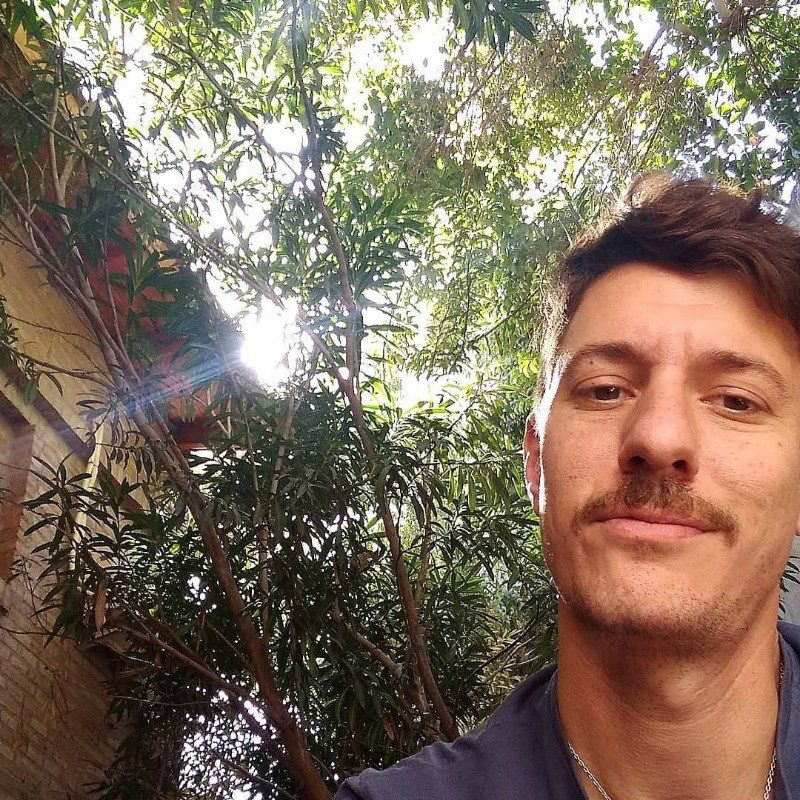
Peter Cubillos, a Mendoza-based writer and winemaker with three published books and over 20 years of experience in wine tourism.